All B2B leaders know buyers don’t convert in a single step. They move through a journey of first discovering your brand, then evaluating options, to finally making a purchase decision. This progression is where the ad funnel comes in.
An ad funnel is a structured pathway that guides potential buyers from awareness to conversion. Without it, your ads risk becoming disconnected messages that waste money and miss opportunities. With it, your campaigns become a coordinated system designed to build trust, answer objections, and close deals.
In competitive industries where decision-makers are skeptical and budgets are tight, an effective ad funnel can mean the difference between stalled leads and accelerated revenue. In this article, let’s go over the specifics together.
What is an Ad Funnel?
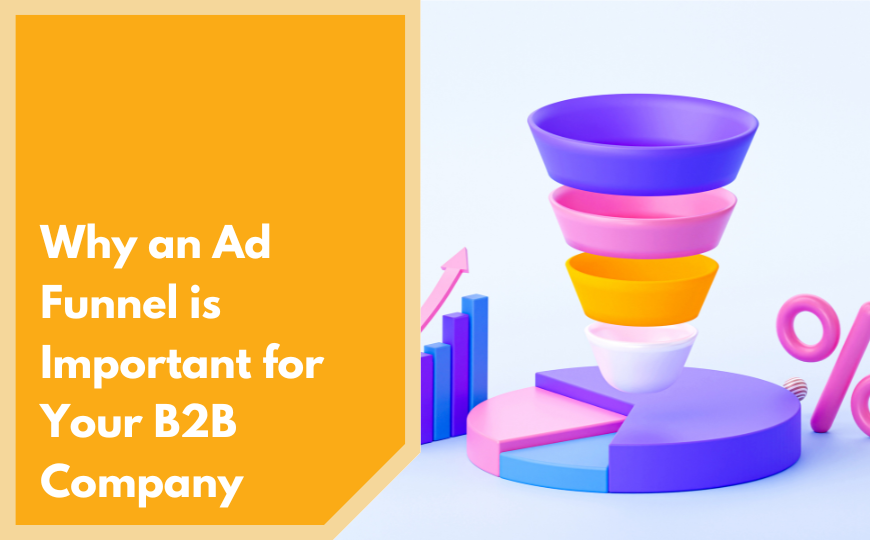
Put simply, an ad funnel is the framework that maps campaigns to different stages of the buyer journey. Each stage reflects how “warm” or “ready” a lead is and requires distinct messaging, targeting, and goals.
Think of it like this:
- At the top, you’re reaching broad audiences who may not even know they have a problem.
- In the middle, you’re speaking to engaged prospects weighing their options.
- At the bottom, you’re addressing buyers ready to make a decision.
This funnel allows marketers to systematically nurture leads, instead of expecting one generic ad to do all the heavy lifting.
Why do Ad Funnels Matter in B2B?
In B2B, purchase decisions are rarely impulsive. Buying cycles are long, multiple stakeholders are involved, and deals are scrutinized from every angle. A single “buy now” ad simply won’t cut it.
An ad funnel recognizes these complexities. It:
- Aligns with buyer psychology: Buyers want education before sales pressure.
- Increases efficiency: Tailored messaging ensures you don’t waste money showing conversion offers to cold audiences.
- Drives higher ROI: When you nurture instead of hard-sell, leads are more likely to convert and remain loyal customers.
With that background, let’s explore the three parts of the ad funnel in more detail.
The Three Core Stages of the Ad Funnel
1. Awareness: Building Visibility
At the awareness stage, your prospects may not know your brand or even realize they have a pressing problem. Since your goal is to capture attention and spark curiosity, ads should focus on education, visibility, and trust-building rather than aggressive selling. Examples include LinkedIn thought leadership campaigns, educational content promos (guides, webinars, blogs), and display ads that highlight key industry insights.
2. Consideration: Engaging the Right Audience
Now your prospects are aware and comparing options. This is the stage where your goal is to nurture interest and move leads closer to decision. To that end, focus on demonstrating expertise and credibility by showing why your solution solves their problem better than competitors. Some examples include case study ads, retargeting campaigns to visitors who engaged with awareness-stage content, and webinar invites or downloadable playbooks.
3. Conversion: Driving Action
This is where your ads should eliminate final doubts and encourage action. By this point, the audience knows you and trusts you, so they just need the final nudge to commit. Your goal is to secure commitment and turn interest into revenue, so now is the time to focus on free trial or consultation ads, pricing-page retargeting, and direct offers like “Request a Quote” or “Book a Demo.”
Five Steps for a Successful Ad Funnel
Step 1: Define Your Buyer Journey
Work closely with sales to map how prospects move from first touch to signed contract. Identify the typical questions, objections, and decision points at each stage.
Step 2: Create Stage-Specific Messaging
Put simply, awareness ads should educate and inspire, consideration ads should differentiate your value, and conversion ads should drive urgency and proof.
Step 3: Leverage Retargeting
Retargeting is the glue that holds the funnel together. It ensures leads who engage at the top continue seeing relevant mid- and bottom-funnel ads until they convert.
Step 4: Align Channels to Stages
In the awareness stage, focus on display, video, and sponsored content. Next, under the consideration stage, move to LinkedIn retargeting and content downloads. Finally, when reaching the conversion stage, launch direct response ads and sales follow-up campaigns.
Step 5: Optimize Continuously
No funnel is static. Monitor key metrics like cost per lead, conversion rate by stage, and sales velocity to refine targeting and messaging.
Additional Tips for Maximizing Funnel Performance
- Use Content as Currency: Every stage should deliver value by offering guides, webinars, case studies, or demos that match where the buyer is.
- Segment by Industry or Persona: Not all buyers care about the same challenges. Customize funnels to speak directly to different segments.
- Measure True Business Outcomes: Don’t just measure clicks. Track how ads contribute to revenue, pipeline growth, and customer lifetime value.
- Shorten the Cycle With Multi-Channel Touchpoints: Don’t rely on one platform. Use LinkedIn, search, display, and email in tandem to stay top-of-mind.
- Bridge Sales and Marketing: Ensure both teams understand the funnel stages so ads align with sales outreach and conversations.
Build Your Optimal Ad Funnel Today
The most successful B2B companies don’t treat ads as isolated campaigns. They treat them as part of a systematic funnel that guides prospects from awareness through conversion with precision.
Without a funnel, you’re leaving conversions on the table. With one, you’re building a predictable engine that attracts, nurtures, and closes business again and again.
At DirectiveGroup, we design funnels that deliver measurable growth for B2B brands. If you’re ready to build campaigns that drive not just clicks but revenue, we’d love to connect.